
Eco Sailing
Eco-Friendly Sailing in Croatia: A Travel Guide to Protecting the Adriatic Sea
We at scan2sail.com partner with the Association for Promotion of Sailing and Sailor's Ecological Awareness. Among many projects, the Association also aims to help sailors preserve nature, both while navigating and resting. Check ou our nautical ecological manners guide translated in 5 languages, with tips and tricks on how to behave - ecologically.
We also offer other complimentary gifts to our clients:
- 30% discount voucher on Y KNOT handmade nautical bracelets
- Complimentary (free) pizzas for each crew member in an authentic Dalmatian konoba Bare on the island of Prvic
- 10% discount voucher in GARMIN shops in Zagreb and Split (for sailing destination Croatia)
- Personalized nautical restaurants guide in selected sailing region (for sailing destination Croatia)
FIND YOUR PERFECT BOAT WITH US and have an unforgettable sailing experience!
Sustainable Sailing in Croatia: How to Explore the Adriatic Responsibly
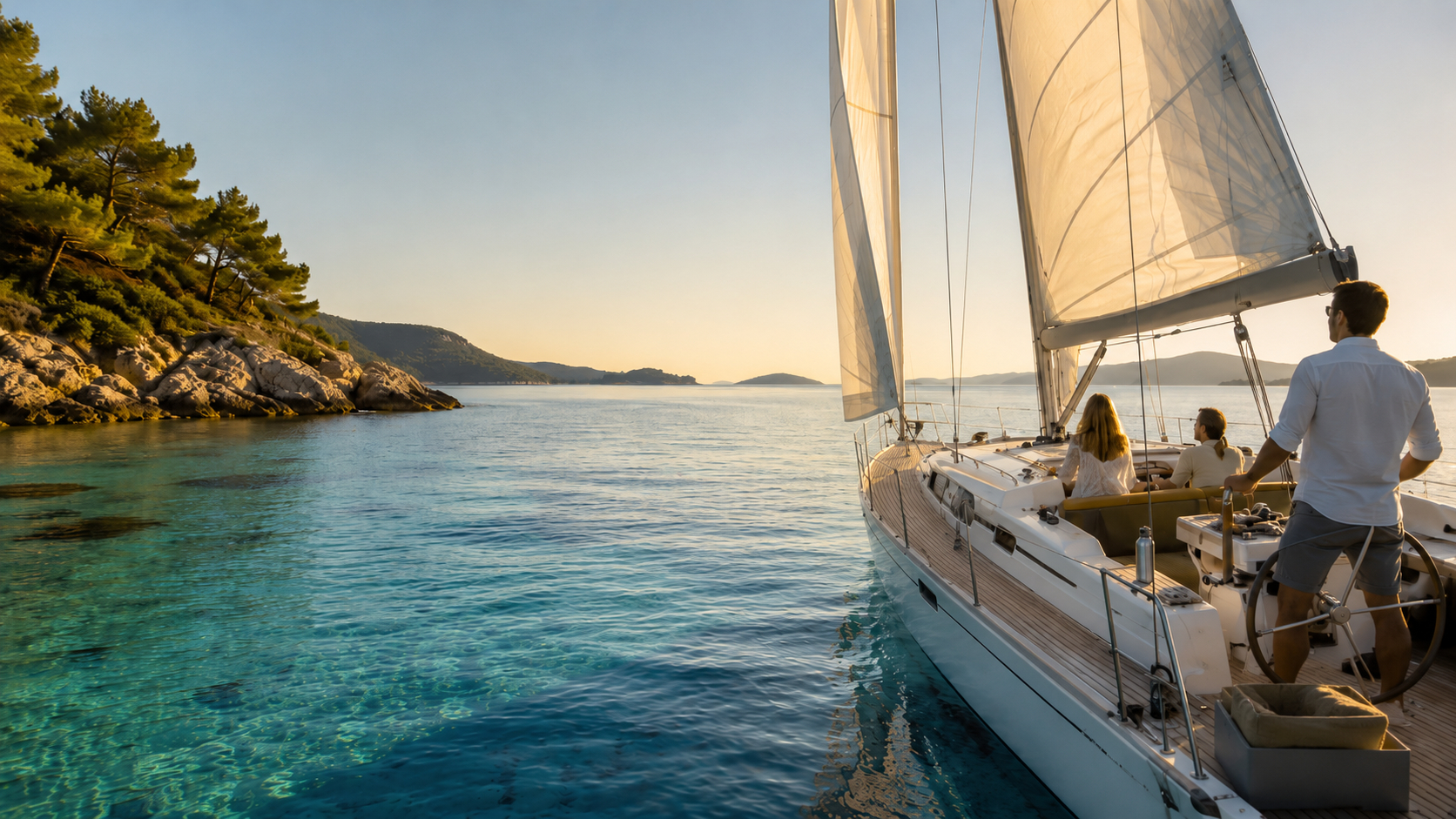
There are places in Europe where the sea feels like more than a backdrop. Croatia is one of them. Along the Adriatic coast, the water moves between islands, bays, stone villages and pine-covered slopes with a clarity that feels almost unreal. A yacht charter in Croatia is not only a way to travel from one destination to another; it is a way to enter a living landscape. Every sunrise in a quiet bay, every swim from the stern, every evening spent under a sky full of stars becomes part of a larger story between people and the sea.
But the beauty of the Adriatic is not something that can be taken for granted. It is delicate, valuable and deeply connected to the habits of everyone who sails through it. The choices made on board, even the small ones, matter. A plastic bag forgotten in the wind, a cigarette butt thrown into the sea, fresh water used without thought or an anchor dropped too close to a crowded beach can leave a trace long after the holiday ends. Responsible sailing is not about rules that limit pleasure. It is about enjoying the sea in a way that allows others to enjoy it tomorrow.
Eco-friendly sailing in Croatia begins with a simple idea: the sea is not only scenery. It is a home, a route, a playground, a source of life and one of the greatest treasures of the Mediterranean. When you travel by boat, you are invited closer to nature than most travellers ever get. You can reach beaches without roads, swim in bays where the water is still and blue, and wake up to the sound of waves against the hull. That privilege comes with responsibility, and the best sailors understand that respect is part of seamanship.
The Adriatic Is a Destination, but Also a Living Ecosystem
The Croatian coast has become one of the most desirable sailing areas in the world for a reason. Its islands are close enough for comfortable cruising, yet diverse enough to make every day feel different. One morning may begin in a quiet anchorage near Kornati, the next evening may end in a historic harbour on Hvar, Vis, Šolta or Brač. Between them are countless coves, swimming stops and natural harbours that make sailing in Croatia so memorable.
This same popularity also brings pressure. Every season, thousands of crews pass through marinas, anchorages and island communities. Many come with good intentions, but holidays often create a relaxed mood in which people forget the long-term effects of their behaviour. Waste thrown into the sea does not simply disappear. Fresh water used carelessly does not refill itself magically. Marine life disturbed by careless anchoring or pollution cannot recover overnight. The Adriatic may look strong and endless, but it is sensitive to repeated small impacts.
That is why ecological awareness is such an important part of modern nautical tourism. The goal is not to make sailing feel complicated. As popularity grows, so does responsibility. Every season, numerous crews set out on sailing yachts, catamarans and motorboats. On the contrary, most responsible habits are easy, natural and quickly become part of the rhythm on board. Once the crew understands why they matter, separating waste, saving water, using the engine thoughtfully and respecting beaches become as normal as checking the wind or securing a mooring line.
Travel Lightly, Even When You Travel by Yacht
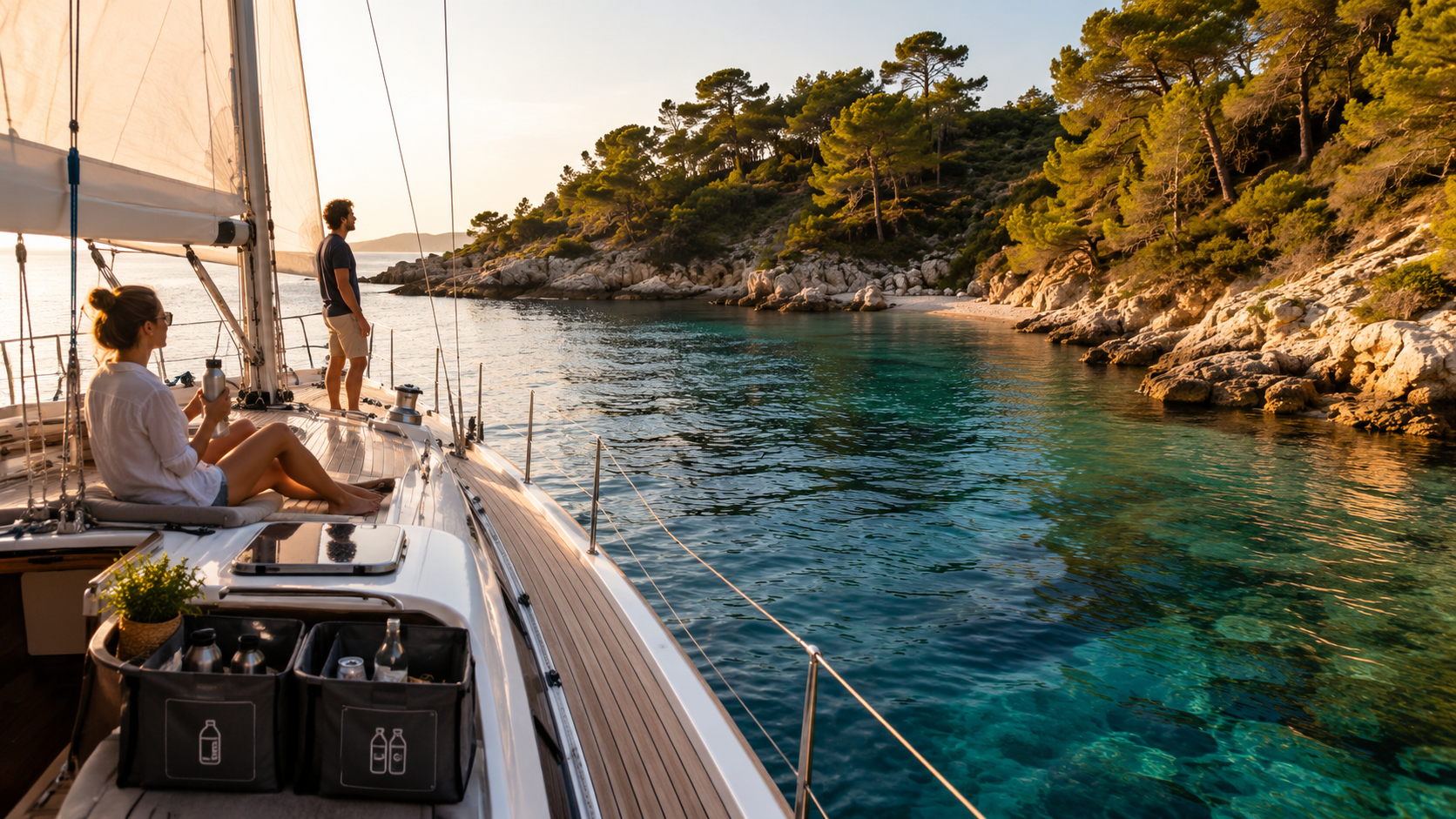
One of the pleasures of sailing is the feeling of self-sufficiency. For a week or two, the boat becomes your home. You carry your water, your food, your equipment and your daily routines with you. This is exactly why preparation matters. Before departure, it is worth thinking not only about what you want to bring, but also about what you will leave behind.
Packaging is one of the easiest things to reduce before you even step on board. Choose larger refillable bottles where possible, avoid unnecessary plastic bags and plan provisions in a way that limits waste. On board, keep separate bags or containers for mixed waste, recyclable packaging and cans. It takes only a little organisation, but the difference is significant. When you arrive in a marina or harbour, use the correct disposal points and make recycling part of your regular stop.
Aluminium cans, plastic packaging and glass should never be treated casually at sea. A single can may seem harmless, but in the marine environment it can remain for generations. The same is true of plastic, which breaks down slowly and can affect fish, birds and the wider ecosystem. The Adriatic is famous for its clean water; keeping it that way depends on thousands of simple decisions made by individual crews.
There is also a quiet satisfaction in taking care of the places you visit. If you find a bottle, bag or can in a bay and can collect it safely, take it with you. It may not be your waste, but removing it is still your contribution. Many experienced sailors know this feeling well: leaving a cove cleaner than you found it can be one of the most rewarding moments of the day.
Cigarette Butts Do Not Belong in the Sea
Few things look smaller than a cigarette butt, and few are ignored so easily. Yet on a boat, cigarette filters are a serious problem. They do not vanish in a few minutes, and they do not belong in the water. In the sea, they break down slowly and release substances that can harm marine life. A cigarette butt thrown overboard is not a minor gesture; it is pollution.
The easiest solution is simple: use a secure ashtray on board and empty it properly on land. Even better, avoid smoking on the boat, especially on sailing yachts where open flame and sails are never a good combination. A boat is a shared space, and clean air is part of the comfort everyone on board enjoys.
There is something symbolic about this small habit. If a crew can respect the sea in the smallest details, it will usually respect it in larger decisions as well. Responsible sailing is built from exactly these moments: the decision not to throw something overboard, the decision to wait until the next marina, the decision to think beyond convenience.
Fresh Water Is a Luxury at Sea
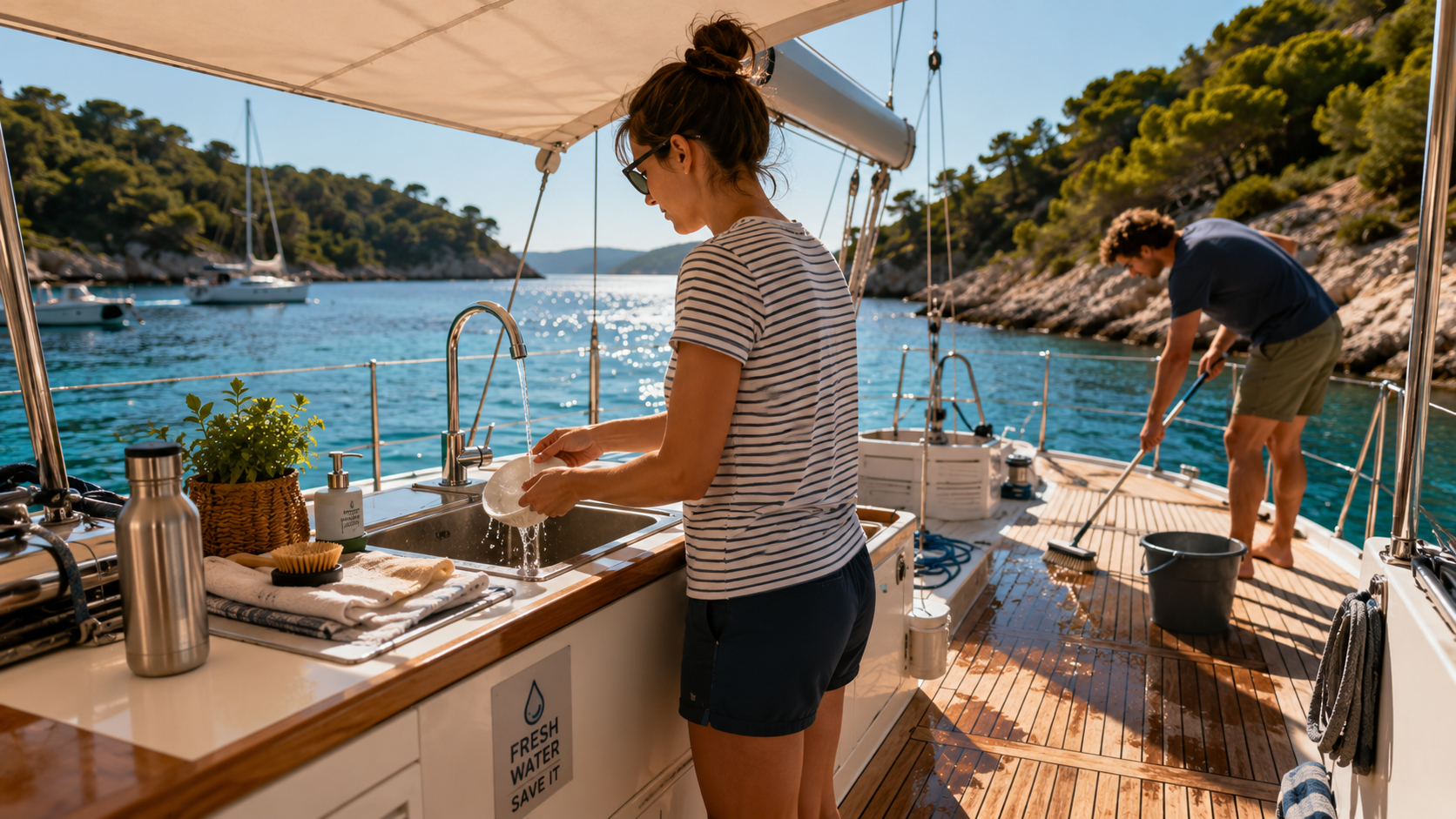
One of the first lessons of life on board is that water has limits. At home, it is easy to leave a tap running without thinking. On a yacht, every litre matters. The water tank reminds everyone that comfort depends on awareness. This is not a limitation; it is one of the valuable lessons sailing teaches.
In the Mediterranean summer, fresh water is especially precious. Coastal towns, islands and marinas all depend on careful supply, and responsible visitors should use it wisely. Short showers, mindful dishwashing and practical cleaning habits help reduce unnecessary consumption. When appropriate, seawater can be used for rinsing or cleaning parts of the boat. Fresh water should be saved for drinking, cooking and essential personal use.
Dishwashing is another place where small habits help. Avoid using detergents directly in the sea. If dishes have only natural food remains, they can be pre-rinsed carefully, but soaps and chemicals should stay out of the water. Eco-friendly products are always the better choice on board, but even they should be used thoughtfully. The best approach is to reduce what needs to be cleaned, use water sparingly and dispose of everything in the right place.
When washing the boat, avoid using drinking water from the tank unnecessarily. Buckets of seawater can often do the job perfectly well. This simple habit saves fresh water and also reminds the crew that comfort on board depends on balance. Sailing brings us close to the elements; it also teaches us not to waste them.
Let the Wind Do the Work
There is no sound quite like a boat moving under sail. The engine falls silent, the hull finds its rhythm and the wind becomes the guide. For many travellers, this is the true heart of a sailing holiday in Croatia. It is slower than motoring, but richer. It allows the journey itself to become part of the experience.
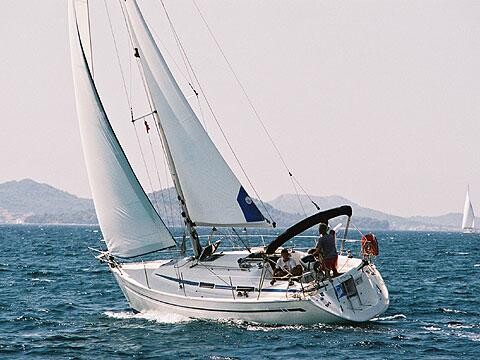
Using the sails whenever conditions allow is also one of the most natural eco-friendly choices a crew can make. It reduces fuel consumption, lowers emissions, creates less noise and keeps the atmosphere on board more peaceful. In a region where the landscape is so closely tied to natural beauty, sailing rather than motoring is a way to travel with the character of the coast rather than against it.
Of course, engines are essential for safety, manoeuvring and calm conditions. Responsible sailing is not about refusing modern convenience. It is about using it intelligently. When the boat is stationary, turn the engine off. When the wind is favourable, raise the sails. When planning a route, allow enough time so the crew is not forced to motor everywhere in a rush. A slower itinerary often becomes a better one.
The Adriatic rewards those who do not hurry. A shorter route with more time to swim, explore and sail can be more memorable than a long route completed under engine noise. The goal is not to collect as many islands as possible; it is to experience them well.
Choose Anchorages With Care
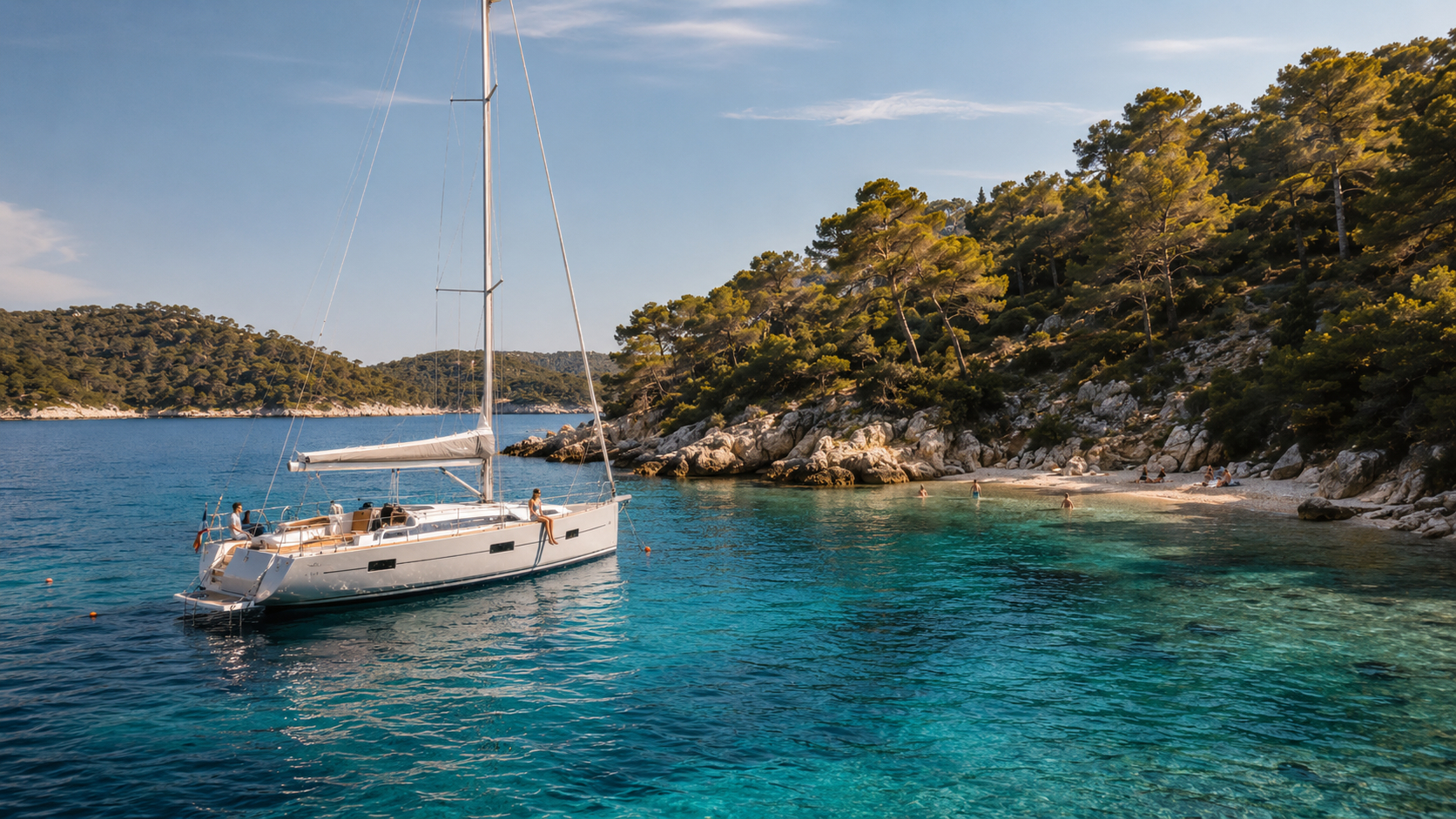
Anchoring is one of the great pleasures of yacht travel. It gives you the freedom to stop for lunch in a bay, swim from the boat or spend the night under the stars. But anchoring also requires awareness. A careless anchoring choice can disturb swimmers, damage the seabed or create tension with other visitors.
If a public beach is full of swimmers, it is not the best place to anchor. One of the reasons to travel by boat is the ability to discover quieter corners of the coast. Instead of stopping directly in front of a crowded beach, look for a suitable anchorage where the boat can remain safe, the crew can relax and people on shore can enjoy their space. Respect works both ways: sailors enjoy the sea, swimmers enjoy the beach and everyone benefits from thoughtful distance.
When anchoring, consider the seabed and local rules. In many parts of the Mediterranean, seagrass meadows and sensitive marine habitats can be damaged by anchors and chains. Use designated mooring fields where available, follow marina or harbour guidance and avoid dragging the anchor across delicate areas. Good anchoring is not only a technical skill; it is an environmental responsibility.
Noise is also part of anchorage etiquette. Music, generators and late-night activity travel easily across water. A peaceful bay is a shared experience. Keeping noise low is another way of respecting the place, other boats and the natural atmosphere that brought everyone there in the first place.
Handle Black Tanks Responsibly
Few topics are less glamorous than wastewater, yet few are more important for clean swimming areas. Black tanks should never be emptied near beaches, marinas, swimmers, anchored boats or sensitive coastal areas. The image is simple enough: nobody wants to swim beside someone else’s waste. Responsible crews plan ahead and use proper pump-out facilities or empty tanks only where legally and environmentally appropriate.
This is especially important in Croatia, where many anchorages are close to beaches, restaurants and small island communities. The water may look open, but the coastline is often intimate. What one boat does can affect many other people nearby. Clean bays depend on responsible handling of wastewater by every crew.
Charter guests who are unsure how the black tank system works should ask during check-in. A good technical briefing is part of a safe and responsible holiday. Understanding the system before departure avoids confusion later and helps prevent mistakes. The same applies to fuel, bilge water, detergents and any other substance that should never enter the sea carelessly.
Respect Marine Life and Coastal Communities
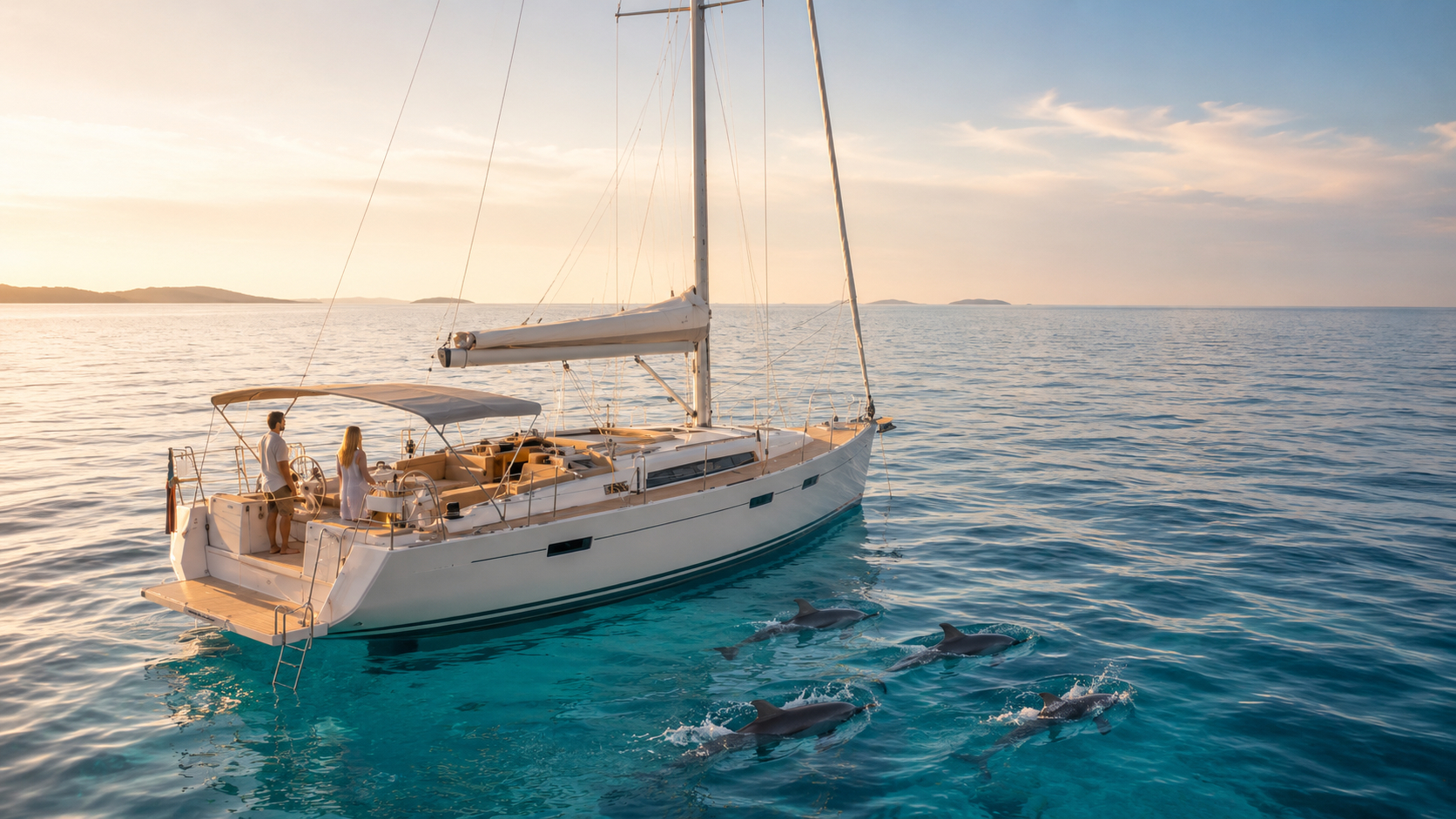
The Adriatic is not empty space between destinations. It is alive. Fish, seabirds, dolphins, underwater habitats and coastal vegetation all belong to the same environment that makes the journey beautiful. Seeing marine life during a yacht charter is a privilege, and it should be enjoyed without interference. Keep a respectful distance from dolphins or other animals, avoid feeding wildlife in ways that disturb natural behaviour and never leave fishing lines, hooks or plastic where animals can be harmed.
Coastal communities also deserve respect. Island towns and fishing villages are not simply scenic stops; they are places where people live, work and protect their traditions. Use local services thoughtfully, respect harbour rules, reduce noise at night and support restaurants, markets and family businesses when possible. Sustainable travel is not only ecological. It is also cultural and economic.
One of the most beautiful parts of sailing in Croatia is the relationship between sea and settlement. Stone quays, old churches, small harbours and waterfront cafés are part of the charm. When sailors behave responsibly, they help keep the connection between nautical tourism and local life positive.
Make Every Crew Member Part of the Eco Routine
Responsible sailing works best when the whole crew understands the plan. On the first day, take a few minutes to explain where rubbish goes, how to save water, what should never be thrown into the sea and how to behave in anchorages. This is especially useful for guests who are new to boating. Many mistakes happen not because people do not care, but because nobody explained the right habit.
Children often respond especially well to eco routines. They can help separate waste, remind adults to turn off taps and notice rubbish on beaches. A sailing holiday can become a powerful lesson in environmental awareness because the connection is immediate. When children swim in the same bay where they helped collect plastic, they understand the importance of care in a way no classroom can fully teach.
The tone matters. Eco-friendly sailing should not feel like criticism or pressure. It should feel like part of good seamanship and good travel. A clean boat, a respectful anchorage and a thoughtful crew create a better holiday for everyone.
A More Beautiful Journey Begins With Awareness
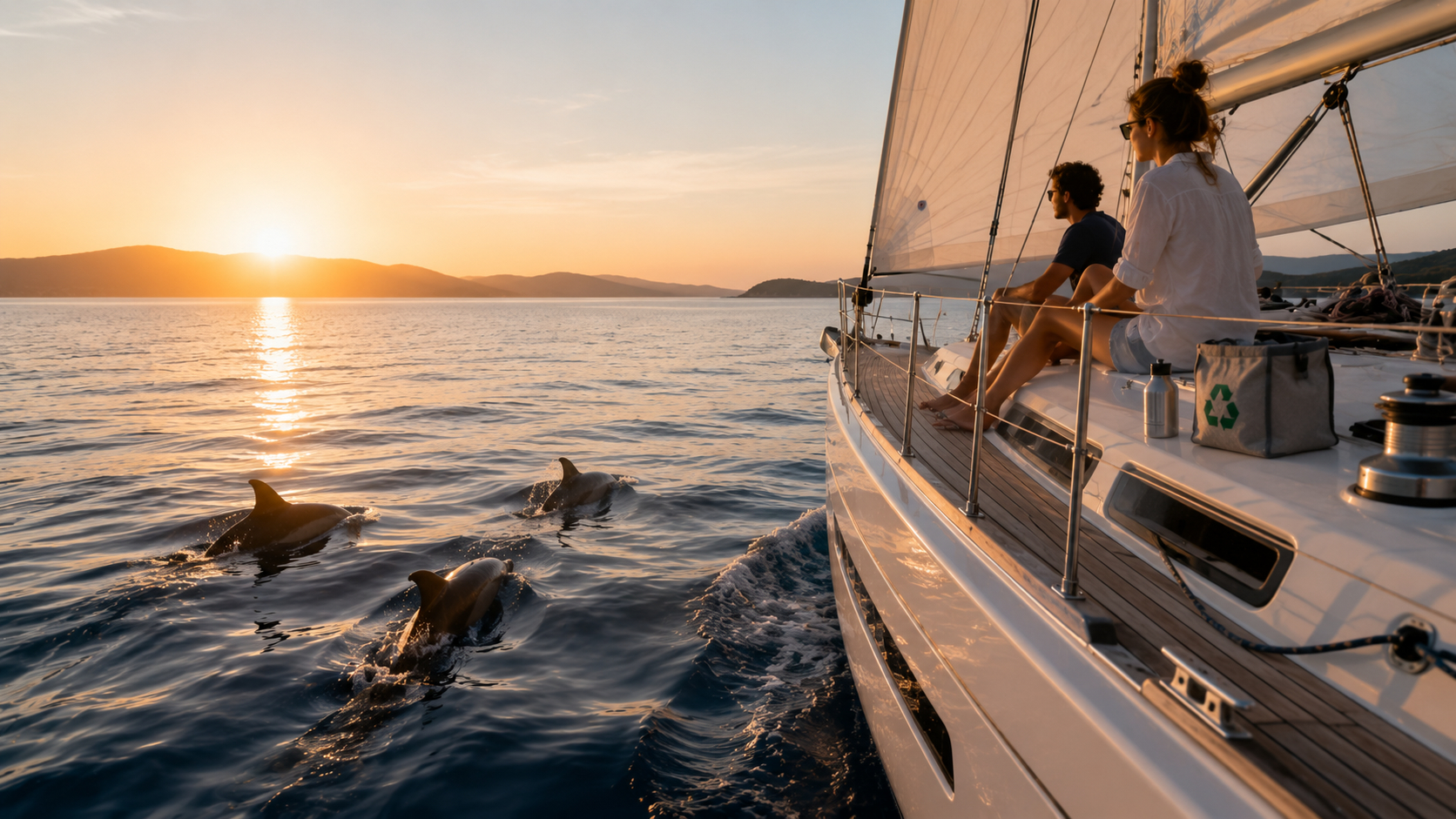
The best travel experiences are rarely only about what we see. They are also about how we move through a place. Sailing in Croatia offers extraordinary access to nature, but that access should be gentle. The more carefully we travel, the more deeply we experience the coast. Quiet sailing, clean bays, respectful anchoring and mindful use of resources all make the journey feel more connected.
There is a special kind of luxury in this approach. It is not the luxury of excess, but the luxury of clarity: clean water below the boat, fresh air in the cockpit, a peaceful bay at sunset and the knowledge that your presence has not damaged the place you came to enjoy. This is the future of nautical travel, and it is also the best version of it.
Eco-friendly sailing does not ask for perfection. It asks for attention. Bring less plastic. Separate waste. Save fresh water. Use the sails. Respect swimmers and wildlife. Handle wastewater properly. Pick up what does not belong in nature. These actions are simple, but together they protect the Adriatic’s greatest gift: its ability to feel wild, clean and alive.
For travellers planning a yacht charter in Croatia, this mindset can transform the holiday. The Adriatic becomes more than a route on a nautical map. It becomes a place you meet with care. Every island, every bay and every mile under sail becomes part of a shared promise: to enjoy the sea without taking its beauty away.
Sail lightly, travel thoughtfully and let the Croatian coast remain as breathtaking for the next crew as it was for yours.